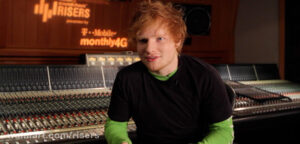
Ed Sheeran
Rapper Macklemore was dropped as the opening act on Ed Sheeran‘s Loop Tour this month after chanting “Free Palestine” while he played Gaza footage on the stadium screens during an early September show at MetLife Stadium. Robert Kraft, owner of the New England Patriots and Gillette Stadium, one of the tour’s venues, confirmed that he barred Macklemore from performing there, citing Macklemore’s “history of antisemitic rhetoric and imagery.” Macklemore also says that Sheeran told him Kraft pushed other venue operators on the tour to ban him from their own shows. According to tour promoter Messina Touring Group, several venue operators on the tour subsequently refused to host the show with Macklemore on the bill.
The backlash began when the Israeli-American Council launched an online petition within days of the MetLife show, accusing Macklemore of turning the concert into a one-sided political rally, and demanding his removal. Singer Pink joined the fray, sharing a post that accused Macklemore of ambushing Jewish fans with anti-Israel messaging.
Macklemore’s ultimate removal then triggered a second wave of reaction that generated headlines for days. Climate activist Greta Thunberg and Irish rap group Kneecap and others voiced support for Macklemore. Singer-songwriter Finneas went further, pulling out of future Sheeran tour dates in solidarity and posting that “artists must not be silenced when they speak up for the oppressed. After days of controversy, Sheeran finally spoke from the stage last Saturday, saying he is “listening and learning” while exploring ways to support victims of the Mideast conflict.
Despite complaints by artists here about being silenced, “free speech” is only a guarantee against government censorship, not a limit on actions by companies. For instance, after the Trump administration recently revoked CNN’s, MS NOW’s, and Politico’s White House credentials and barred them from the White House complex, the three outlets filed a lawsuit this week arguing the government’s ban violates their First Amendment rights. Such freedom of speech does not extend to a concert performed under contract, promoted by and staged in a venue owned by corporations. Private businesses get to decide who performs on their stage or appears on their broadcast, within the law. On social media platforms, for example, users must sign terms of service that limit their free speech, and site moderators often delete comments and even ban users for hate speech and other expression. Likewise, in the workplace, employees and managers do not have “free speech” rights to harass each other.
Macklemore still has every right to chant “Free Palestine” on his records, which he releases through his own label; at a protest; on his own social media accounts and website, etc. But he has no right of continued access to a stage other people had built and financed, once his message brought more backlash than the tour’s promoters and venue owners were willing to withstand. Businesses make that kind of call all the time.
Photo by Lunchbox LP, used under Creative Commons license. https://tinyurl.com/59eavr9f

