
Gas prices become dangerous for GOP
Democrats have hammered Republicans on affordability, especially gas and food prices, as the main issue of the 2026 midterms. They picked a good theme, as a plurality of 47% of registered voters call the rising cost of living the single most important factor in their midterm vote. Democrats now hold their largest lead yet in the polls.
Data centers are a second hot issue, with a large majority of Americans opposing one being built near them. This opposition cuts across party lines. Reflecting one of the major concerns, sixty percent of Americans think that a new data center in their community would raise their electric bills. Voters are also concerned about data centers’ water use, their noise and light pollution, and their effect on residential property values.
For the Republicans, however, time to address these concerns is running out. Election Day is Nov. 3, only 33 days away. Early voting began on September 18 in a number of states, with more being added to the list regularly. The U.S. House already left town until after the midterm elections. The U.S. Senate is scheduled to stay in session only through tomorrow.
Recently, Republicans finally started acknowledging this voter anger. Sen. John Husted of Ohio, facing a tough reelection battle, recently pleaded with his GOP colleagues to “do something real and tangible on affordability.” As a result, he proposed the Ratepayer Protection Act, which purportedly seeks to address both affordability and data centers. But the bill has no real teeth, merely telling state utility regulators to “consider” requiring data centers to pay the added cost of the power plants and electric grid upgrades needed to serve them.
The House passed the bill 417-3 on Sept. 16. However, the bill failed a Senate procedural vote on Wednesday, falling three votes short of the 60 needed to begin debate. Accordingly, with Senators leaving town, the bill is stalled until after the midterms. But even Republican Sen. Thom Tillis said beforehand that it’s “irrational” to believe passing the bill would change voters’ minds.
Senate Republicans have also tried distraction, by holding a Judiciary Committee hearing Tuesday questioning former special counsel Jack Smith about his investigations of Donald Trump. Sen. Eric Schmitt of Missouri crafted an apparent conspiracy theory tying Smith to the Fulton County, Georgia, prosecution of Trump. Schmitt pressed Smith on whether he attended an Atlanta basketball game in February 2024. Smith said that he attended a women’s game between Maryland and Iowa in College Park, Maryland. Schmitt had confused the NBA’s Atlanta Hawks with the Iowa Hawkeyes in an embarrassing misfire.
Meanwhile, Donald Trump keeps making the Republicans’ midterms job harder. His approval rating has fallen to 32%, the lowest of his political career, according to Reuters/Ipsos. He has called the affordability crisis a “hoax”. He also says that communities rejecting data centers “want to end up being backwards and poor.” Yet some Republicans, including Michigan Senate candidate Mike Rogers and Texas Gov. Greg Abbott, have called for a pause in new data center projects.
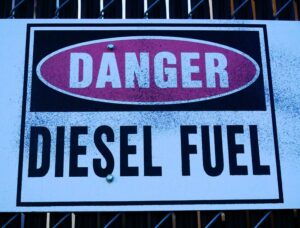
Trump’s Iran war also continues to damage Republican candidates. Trump recently rejected Iran’s offer to reopen the Strait of Hormuz. According to the Wall Street Journal, Trump put politics over national security by telling aides that he expects to resume bombing after the midterms. The price of gas (icluding diesel fuel) has jumped over 50% since Trump’s Iran war began, to more than $4.40 per gallon. Seventeen incumbent Republicans running for reelection have called for an end to the war. Still, the Senate rejected, on a near party-line vote, a resolution that calls for Trump to end the war without Congressional approval. In every way, therefore, it looks like the Republicans’ midterms prospects are of their own making.
Photo by Rick Obst, used under Creative Commons license. https://tinyurl.com/3a79ex23

