Home » Democratic Messaging » Page 28

Category Archives: Democratic Messaging

Messaging guru George Lakoff asks: Why are you a Democrat?

Democratic Donkey

Dr. George Lakoff, retired professor of cognitive science and linguistics at the University of California at Berkeley and a communications guru for Democrats, asks this week’s key question: “Why are you a Democrat?” Lakoff’s question can be found at his blog, and on his Twitter feed:

Lakoff’s question comes at a crucial time for Democrats.

The great Republican hoodwink

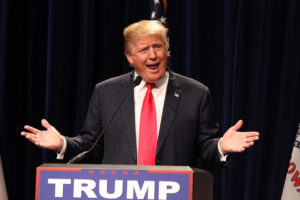
Donald Trump on the golf course, again

Donald Trump‘s approval numbers — as low as 32 percent — are the worst ever for a president at this point in his term. Likewise,  Trump’s handling of the hurricanes this season dropped 20 points to just 44 percent after Hurricane Maria devastated Puerto Rico and, instead of focusing on helping the people there (who are Americans), Trump took to the golf course and then criticized them. What’s amazing, though, is that Trump’s approval among Republicans is quite high. Why the disconnect?

Instead of getting distracted, drive the narrative


Puerto Rico devastation from Hurricane Maria

Back in February 2011, we published Messaging Maxim #1: Go On Offense. Perhaps some folks need a refresher course. In that post, we wrote, “If you’re fighting a political battle on the other side’s rhetorical turf, you’ve already lost.” At the time, such advice was referring to phony cultural issues like “Ground Zero Mosque” and “is President Obama a Muslim?” that Republicans had ginned up and repeated everywhere they could (see Messaging Maxim #2: Rinse and Repeat). With their herd mentality, the mainstream media then picked up these issues and focused their broadcasts, cablecasts and column space on them.

Fast forward to today. Donald Trump and the Republicans are doing the same thing again, and it’s working. Currently, the phony cultural issues are: “Kneeling NFL Players” and “Harvey Weinstein.” To those, you can add, “NBC and CNN Licenses.” By next week, expect different cultural issues.

Now is not too soon to talk about gun violence

The Knotted Gun

The shootings by Stephen Paddock in Las Vegas on Sunday night were the deadliest in modern U.S. history. 59 people are now dead, with over 500 injured. And yet, on Monday, Trump White House spokesperson Sarah Huckabee Sanders, asked if Donald Trump was now discussing whether new gun laws are needed, replied that “it would be premature for us to discuss policy” so soon after the killings. Sanders’ reply is similar to what many conservatives and the National Rifle Association say when confronted with mass shootings of civilians involving semiautomatic or, in this case, automatic, weapons. They are wrong for a couple of major reasons:

Donald Trump, the Great Divider

Armed white supremacist in Charlottesville, VA

Successful presidents of both political parties are usually the ones who, in times of crisis or difficulty, rise above partisanship and unite America. There are many examples of this, from Abraham Lincoln literally keeping the Union together, to Franklin Roosevelt leading us against Germany and Japan in World War 2, to Ronald Reagan eulogizing the Challenger Space Shuttle astronauts or calling upon Soviet head of state Mikhail Gorbachev to “tear down” the Berlin Wall, Bill Clinton soothing a shocked America after the Oklahoma City bombing, George W. Bush standing with firefighters at the World Trade Center site after the 9/11 attacks, and Barack Obama successfully hunting down and killing Osama bin Laden. We may not agree with the policies these presidents pursue after such crises (for example, Bush’s Iraq War), but at least for a time, these leaders make us feel like we’re part of one big, strong nation.

Unfortunately, this is not the case with Donald Trump. Rather than being a Great Uniter, he has repeatedly proven himself to be the Great Divider, usually along racial and ethnic lines. Indeed, Trump essentially begun his presidential run during Barack Obama’s presidency by being one of the head cheerleaders in the “birther” movement, which questioned Obama’s Americanism and his birth certificate. Trump then ran his own presidential campaign in a divisive manner from the get-go, saying in his presidential announcement speech about Mexican immigrants:

They’re bringing drugs. They’re bringing crime. They’re rapists.

From there, Trump has pitted one group (often his base of white males) against another, including the following partial list:

The sad, selfish argument against healthcare

Senate GOP Healthcare bill

In the current debate over Republican efforts to repeal the Affordable Care Act, one of the saddest arguments to be heard is the one that goes, “why should I pay for someone else’s healthcare?” Such an argument gets many things wrong at once, both intellectually and morally.

First, the entire concept of insurance is a pooling of funds and risk, so that everyone is literally paying for someone else, and vice versa. For example, in South Florida, one is told that car insurance rates are high for all residents because there are many claims due to the large number of tourists getting into trouble with rental cars on unfamiliar roads. Many local residents would rightfully object to paying higher rates for others’ accidents, but that is how insurance works. The idea, however, is that costs are kept down by pooling the risk, for example, such that middle-aged drivers might pay more than they get back in claims, but when they are both very young and very old, they are much more likely to have more claims, so the system balances out. Similarly, the Affordable Care Act (based on a conservative idea from the Heritage Foundation and first implemented by Republican Governor Mitt Romney in Massachusetts) incorporates premiums paid by younger people, who generally have fewer claims, going more to older and sicker people, but such young people of course could get into a serious accident or become sick themselves any time, plus they are likely to have more claims as they age. Thus, the idea of “why am I paying for someone else?” may only be true for a brief moment.
Can Hurricanes Harvey and Irma bring Democrats together?

Citizens cleaning up in Sebring, FL after Hurricane Irma

During the recent disastrous Hurricanes Harvey and Irma, one thing has stood out: Americans came together to help each other in life and death situations, both on the ground and through generous donations to those in need. In most cases, those providing such help didn’t know the people they were helping, much less their political persuasions. Compared to such inspirational American spirit, the current intra-party squabbling on the Democratic side, colloquially between the “Bernie people” and the “Hillary people,” seems to pale. Perhaps, therefore, this is a good opportunity for both sides in the squabble to have a reset, and to focus on what’s really most important.

The Democrats and the power of Why

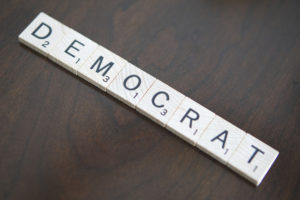
Democratic Scrabble

Much has been written about the Democratic Party’s new economic theme which it unveiled in July. This new theme is called “A Better Deal.” Unfortunately, a lot of the feedback for the Democrats over their new messaging has been negative. Much of the criticism centers around the fact that “A Better Deal” is not an organic, positive slogan or underlying message, but rather a comparison to Donald Trump and the Republicans. Indeed, the terminology plays off of Trump’s first and most famous book, “The Art of the Deal,” as well as Trump’s frequent use of the word “deal” in both business and political situations. There is a reason why we came up with Messaging Maxim #8: Don’t use the other side’s labels. Doing so is like playing on the other team’s field, with the other team’s rules. It gives your opponents an advantage and has an air of “me too” desperation. Why couldn’t the Democrats come up with their own, more original and inspiring theme?

The solution may lie in what’s called “the Power of Why.”

Social media coverage of Hurricane Harvey brings Americans together

Driver receives assistance in Pearland, TX during Hurricane Harvey

This past weekend, Twitter and Facebook posts about the Mayweather-McGregor fight gave way to posts about Hurricane Harvey making landfall in Texas, and causing tremendous flooding devastation. Since then, as more traditional media such as broadcast and cable TV news are making admirable efforts on the scene with live reporting (and even some rescue work), social media users are sending around gobs of information, donation and volunteering tips, and rescue requests. Here are some of the highlights of social media activity in Houston, around the U.S. and in other countries as well:

How to talk to your Republican friends about Donald Trump

Donald Trump: If it does not fit, you must quit

There’s no sport in bashing Donald Trump nowadays. At least once a week, and sometimes once per day, Trump does or says something so shocking, insensitive or stupid that we just can’t believe it. The most recent shocker was Trump’s impromptu press conference days after the tragic pro-Nazi rally in Charlottesville, Virginia that included a terrorist attack, where Trump blamed “many sides,” and said there were “fine people” on the pro-Nazi side. Eventually, we come to expect more such behavior from Trump.

It’s therefore easy for Donald Trump’s critics to bond with one another and trade attacks on Trump. But what if you have friends who are Republicans and Trump supporters? What can you say to them without wrecking the friendship? I have come up with the following statement that just might do the trick, and maybe even make your friends think twice about their support for Trump: